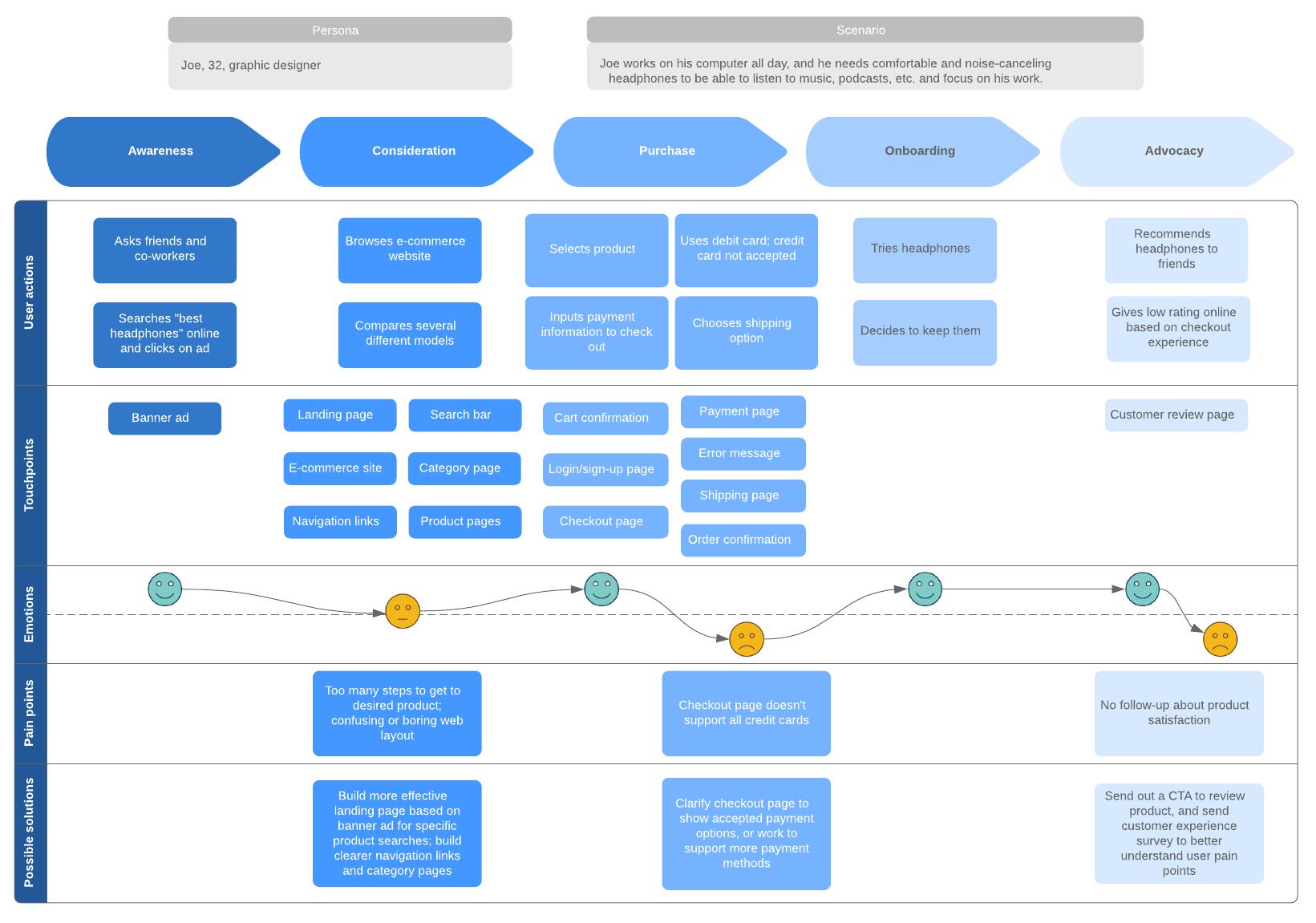
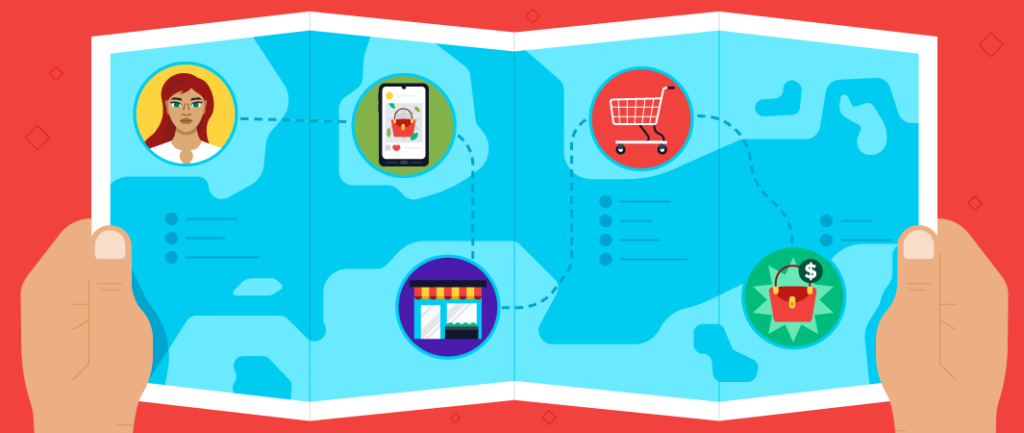
Understanding your customers’ journey is essential for designing effective digital marketing strategies. A customer journey map is a visual representation of the various touchpoints and interactions a customer has with your brand throughout their entire buying process. It helps you gain insights into customer behavior, identify pain points, and optimize their experience at each stage. In this article, we will explore the importance of creating a customer journey map for digital marketing and provide tips on how to do it effectively.
Define the Stages of the Customer Journey:
The customer journey consists of several stages that customers go through when interacting with your brand. These stages provide a framework for understanding their progression and help you tailor your marketing efforts accordingly. The common stages include awareness, consideration, purchase, and post-purchase.
Research and Gather Data:
To create an accurate customer journey map, it’s crucial to gather data and insights about your customers’ behavior. Utilize various tools and techniques such as web analytics, social media analytics, and customer surveys to collect relevant data. Analyze metrics like website traffic, engagement rates, and conversion rates to identify patterns and trends. Additionally, leverage customer feedback and testimonials to gain a deeper understanding of their experiences and preferences.
Identify Customer Touchpoints:
Mapping out the touchpoints where customers interact with your brand is essential for a comprehensive customer journey. These touchpoints can span both digital and offline channels, including your website, social media platforms, email marketing, physical stores, customer service, and more. By identifying these touchpoints, you can ensure that your customer journey map covers the full scope of customer interactions.
Understand Customer Goals and Pain Points:
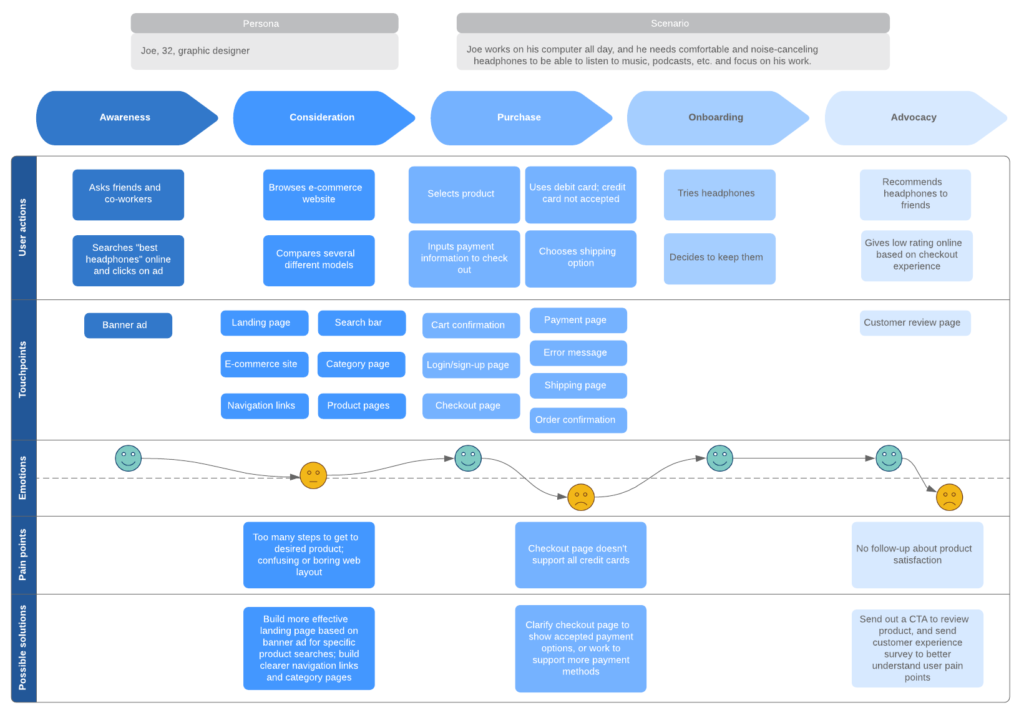
Put yourself in your customers’ shoes and gain a deep understanding of their goals and pain points at each stage of the journey. What are they trying to achieve? What challenges or obstacles do they face along the way? By empathizing with your customers, you can identify areas where you can provide value and address their needs effectively, enhancing their overall experience.
Visualize the Customer Journey:
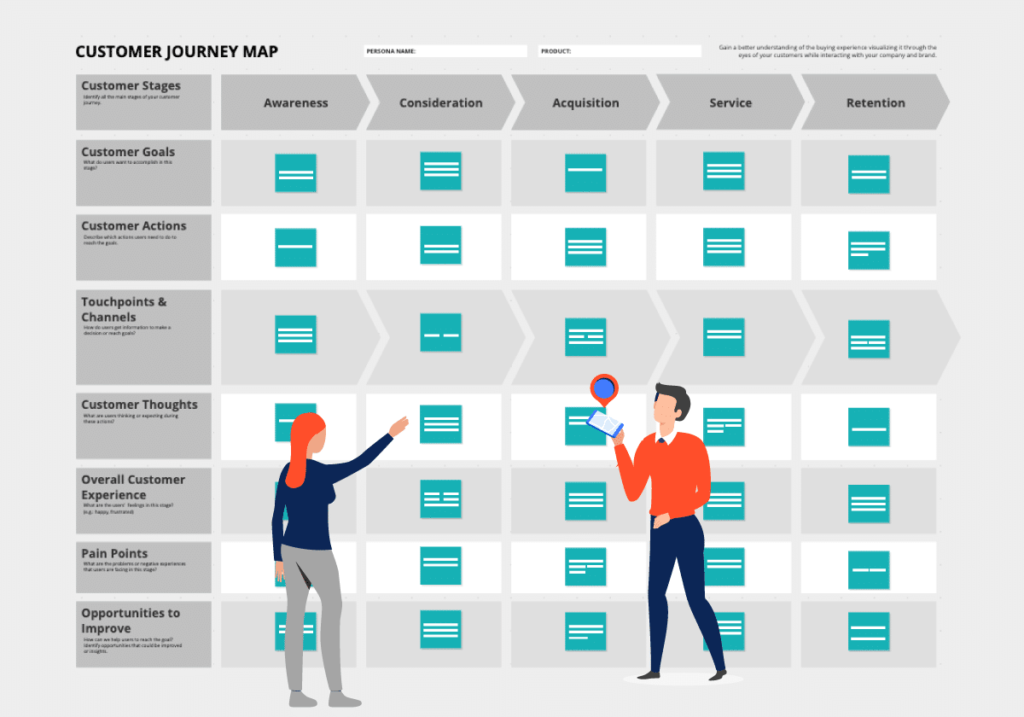
Creating a visual representation of the customer journey map helps make it more tangible and easier to comprehend. You can use flowcharts, timelines, or other visual formats to illustrate each stage, touchpoint, customer goals, pain points, and potential actions. Visuals such as icons, colors, and diagrams can make the map visually appealing and intuitive to understand.
Analyze and Optimize the Customer Journey:
Analyzing the customer journey map is crucial for identifying areas that need improvement. Look for bottlenecks, friction points, or gaps in the customer experience. By identifying these areas, you can prioritize your optimization efforts and fine-tune your digital marketing strategies accordingly. Continuous analysis and optimization ensure that your customer journey remains effective and aligned with your customers’ evolving needs.
Test and Iterate:
Implement changes to your digital marketing strategies based on the insights gained from analyzing the customer journey map. Test different approaches and tactics to determine what resonates best with your customers at each stage. By monitoring and measuring the impact of your optimizations, you can gather valuable feedback and make data-driven decisions for ongoing improvement. Regular testing and iteration help you stay ahead and deliver a superior customer experience throughout the journey.
In conclusion, creating a customer journey map for digital marketing allows you to gain a comprehensive understanding of your customers’ interactions with your brand. It helps you identify pain points, optimize the customer experience, and deliver personalized and targeted marketing messages at each stage of the journey. By mapping out the customer journey and continually refining your strategies, you can enhance customer satisfaction, increase conversions, and drive business growth.
Key Takeaways:
- Define the stages of the customer journey, including awareness, consideration, purchase, and post-purchase.
- Gather data and insights about customer behavior through analytics and surveys.
- Identify customer touchpoints across digital and offline channels.
- Understand customer goals and pain points at each stage of the journey.
- Visualize the customer journey map using flowcharts or timelines.
- Analyze and optimize the customer journey to improve the overall experience.
- Test different approaches and iterate based on customer feedback and data.
Contact us to learn more about how we can assist you in creating a customer journey map and optimizing your digital marketing strategies for better customer engagement and business results.